Every website owner eventually faces the same challenge: you publish great content, but traffic remains flat. The missing ingredient is often authority, and authority comes from backlinks. In the world of Search Engine Optimization (SEO), what other people say about you matters just as much as what you say about yourself. Backlinks act as digital endorsements, signaling to search engines that your content is valuable, credible, and worth ranking.This guide moves beyond theory to provide a practical roadmap. We will strip away the jargon and explain exactly how these links function, why they drive rankings, and how you can earn them safely. You will learn to distinguish between good and bad links, use the right tools, and execute strategies that build long-term trust with Google and your audience.
What Are Backlinks?
Before you can build a strategy, you need to understand the fundamental mechanics of how the web connects. Backlinks are the threads that tie the internet together, allowing users and search engines to travel from one source to another.
Definition of Backlinks
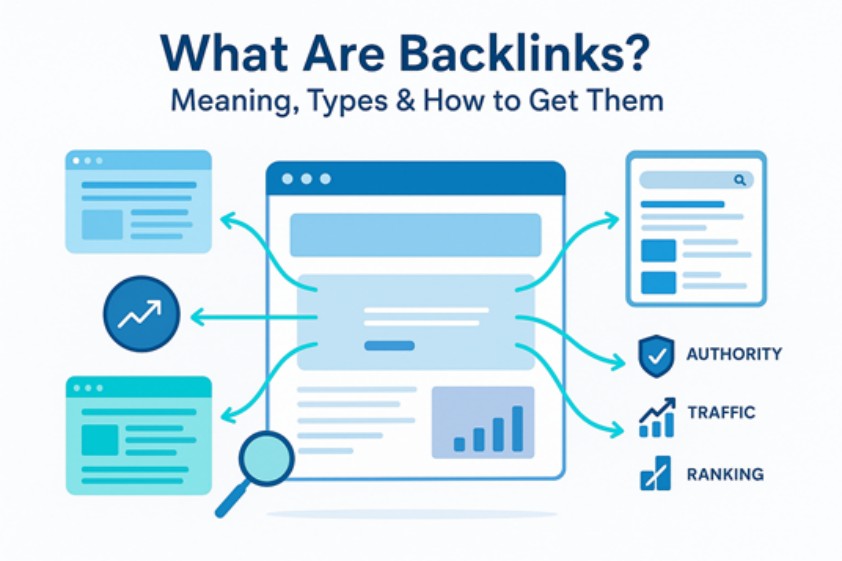
A backlink is simply a hyperlink on one website that points to a page on another website. When Site A links to Site B, Site B receives a backlink. In SEO terms, these are often referred to as "inbound links" or "incoming links." Think of a backlink as a vote of confidence. When a webmaster links to your site, they are effectively telling their readers, "This resource is useful, and I trust it enough to send you there."Search engines like Google use these votes to determine the quality and popularity of a page. A page with many high-quality backlinks is similar to a research paper cited by many other academics; it gains authority and perceived importance. However, not all votes are equal. A link from a highly respected industry news site carries far more weight than a link from a brand-new, empty blog.
Difference Between a Link and a Backlink
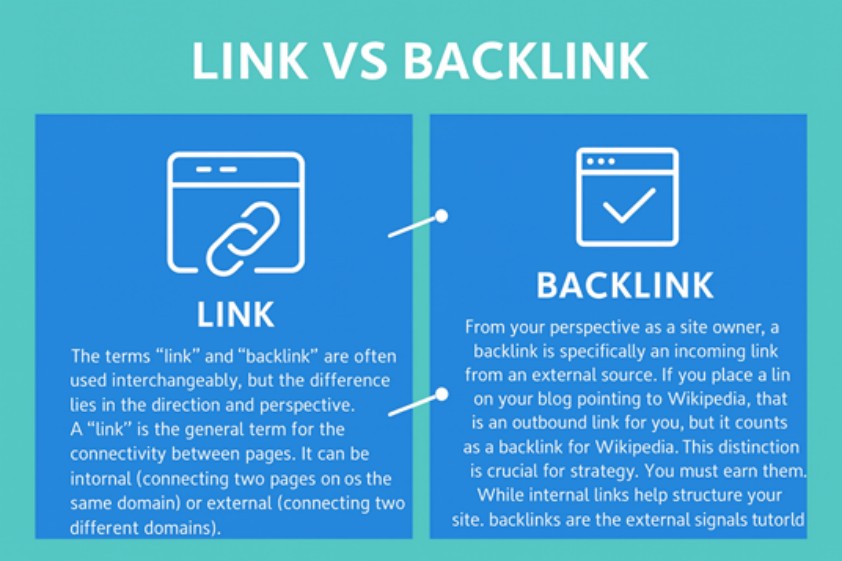
The terms "link" and "backlink" are often used interchangeably, but the difference lies in the direction and perspective. A "link" is the general term for the connectivity between pages. It can be internal (connecting two pages on the same domain) or external (connecting two different domains).From your perspective as a site owner, a backlink is specifically an incoming link from an external source. If you place a link on your blog pointing to Wikipedia, that is an outbound link for you, but it counts as a backlink for Wikipedia. This distinction is crucial for strategy. You have total control over your internal links and outbound links, but you cannot directly control your backlinks. You must earn them. While internal links help structure your site, backlinks are the external signals that validate your site's authority to the rest of the world.
Exploring a Simple Link Network
To visualize how this works, imagine a small network of three websites: a popular technology news portal (Site A), a niche software blog (Site B), and your business website (Site C). Site A writes a major story and references a tutorial on Site B. Site B, in that tutorial, links to a case study on your website, Site C.In this chain, authority flows like water. Site A passes some of its significant authority to Site B via a backlink. Site B then passes a portion of that authority to you. Even though Site A did not link to you directly, you benefit from being part of a trusted neighborhood. Search engines crawl these connections to map out relationships. They see that trusted sites tend to link to other trusted sites. By earning backlinks from reputable nodes in this network, you anchor your website firmly within the "trusted" side of the web, signaling that you belong in top search results.
Why Backlinks Are Important for SEO
Understanding the mechanics is step one; understanding the value is step two. You might ask, why are backlinks important if I already have great content? The answer is that Google was built on a foundation of link analysis. Links remain one of the strongest ranking signals because they are the hardest metric to fake at scale.
Improve Rankings & Authority
The primary reason SEO professionals chase backlinks is to improve rankings. Google's original algorithm, PageRank, was designed to count links as votes. While the system is far more complex today, the core principle remains: pages with more high-quality backlinks tend to rank higher for competitive keywords.When a high-authority site links to you, it passes "link equity" (often called "link juice"). This equity boosts your Domain Authority (DA) and Page Authority (PA). As your site's authority grows, you will find it easier to rank for new keywords. A strong backlink profile acts like a rising tide that lifts all boats; individual pages rank better, and your entire domain gains a "trust shield" that can protect you against minor algorithmic fluctuations. Without backlinks, even the best content often struggles to break onto the first page of search results.
Help Search Engines Understand Relevance
Backlinks do more than just pass power; they provide context. This brings us to the question: what do backlinks do for context? They tell search engines what your page is about based on the anchor text (the clickable words) and the content surrounding the link.If a website about "organic gardening" links to your site with the anchor text "best compost bins," Google learns to associate your page with compost bins. When ten different gardening sites link to you with similar phrasing, Google becomes confident that your page is a relevant authority on that specific topic. This relevance signal is critical. If you have thousands of links from gambling or pharmaceutical sites pointing to your gardening blog, it confuses search engines and can actually hurt your rankings. Quality backlinks reinforce your topical expertise.
Earn Referral Traffic
SEO is not just about robots; it is about people. A well-placed backlink on a popular website drives direct traffic to your page. This is known as referral traffic. Unlike organic traffic, which comes from a search query, referral traffic consists of users who are already reading about a related topic and click through to learn more.These visitors are often highly qualified. For example, if you sell hiking boots and a popular outdoor travel blog links to your product review, the readers who click that link are likely interested in buying boots. They are pre-qualified leads. In many cases, referral traffic has a lower bounce rate and a higher conversion rate than general search traffic. A solid link-building strategy should prioritize links that actually get clicked, ensuring you get value even if your rankings take time to climb.
Boost Crawling & Indexing Efficiency
Search engines use bots (spiders) to crawl the web. They discover new content by following links from known pages to new ones. If your website is new and has zero backlinks, these bots have no path to reach you. You are essentially an island.Backlinks act as bridges. When a frequently crawled news site or a popular industry blog links to your new article, Googlebot is likely to follow that link and discover your page almost immediately. This leads to faster indexing. For large websites with thousands of pages, backlinks to category pages or deep internal pages ensure that bots crawl the entire site structure more efficiently. Without adequate inbound links, your deep content might remain undiscovered and unindexed for weeks or even months.
Competitive Intelligence Advantages
Analyzing backlinks offers a window into your competitors' strategies. By looking at who links to the top-ranking sites in your niche, you can reverse-engineer their success. You can see exactly which PR campaigns worked for them, which guest posts they wrote, and which directories they are listed in.This intelligence removes the guesswork from your own marketing. If you see that your top three competitors all have links from a specific trade association, you know that you should also target that association. It highlights gaps in your own profile and reveals new content ideas. If a competitor earned hundreds of links for a "2024 Industry Statistics" report, you know that creating a "2025 Updated Statistics" report is a proven way to attract attention and links.
What Determines Backlink Value?
Not all backlinks are created equal. In fact, a single link from a prestigious source can be worth more than hundreds of low-quality links. To build a safe and effective profile, you need to know how to judge the quality of a potential link opportunity.
Dofollow vs. Nofollow Status
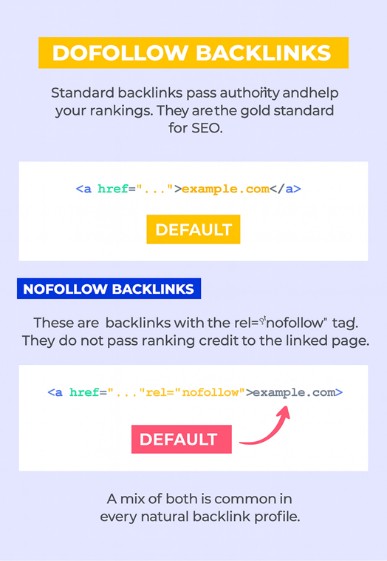
One of the first technical checks is the "rel" attribute of a link. Standard links are often called do follow backlinks (though "dofollow" isn't an actual code attribute, it's the default state). These links pass authority and help your rankings. They are the gold standard for SEO.On the other hand, you might ask, what is a no follow backlink? These are links with the rel="nofollow" tag. This tag tells search engines, "I am linking to this page, but I do not want to pass ranking credit to it." While nofollow links do not directly boost authority, they are still valuable for traffic and brand awareness. A natural backlink profile contains a mix of both. If you only have dofollow links, it can look suspicious and manipulative to Google.
Domain & Page Authority
Authority metrics predict how influential a link will be. Domain Authority (DA) or Domain Rating (DR) measures the overall strength of the entire website. Page Authority (PA) or URL Rating (UR) measures the strength of the specific page linking to you.A link from a high-authority domain like the New York Times is incredibly powerful because that domain has millions of backlinks of its own. However, page authority matters too. A link from a brand-new blog post on a high-authority site might pass less value initially than a link from an older, well-established resource page on a medium-authority site. When evaluating opportunities, aim for sites that have real traffic and a solid reputation, rather than just chasing a high abstract number.
Topical Relevance
Relevance is arguably becoming more important than raw authority. Google wants to provide the best answers, so it prioritizes links from topically related sites. If you run a bakery, a link from a food blogger or a wedding planner is highly relevant. A link from a car mechanic's website, even if it has high authority, makes little sense.Relevance helps search engines categorize your site. It confirms your niche. When you build links, always ask: "Does it make sense for this website to link to me?" If the connection feels forced or unnatural, the algorithm will likely discount its value. Focus on building relationships within your specific industry ecosystem to ensure every link reinforces your topical expertise.
Placement & Click Likelihood
Where the link appears on the page impacts its SEO weight. Google assigns more value to links that are likely to be clicked. A link embedded within the main body content—surrounded by relevant text—is the most valuable type. It suggests the link was placed editorially to help the reader.In contrast, links buried in the footer, sidebar, or a massive list of "partners" are often ignored by users and devalued by search engines. These are known as "boilerplate" links. If you are writing a guest post or securing a placement, always fight for a position high up in the main article text. A link in the first paragraph is generally worth more than a link in the last paragraph.
Anchor Text Optimization
Anchor text is the visible, clickable text of a link. It gives Google a strong clue about the destination page's topic. For example, a link with the anchor text "best running shoes" tells Google the target page is likely about running shoes.However, over-optimizing anchor text is dangerous. If 90% of your backlinks use the exact same commercial keyword, it looks like spam. A natural profile includes a variety of anchor types: branded anchors (e.g., "Nike"), naked URLs (e.g., "nike.com"), generic anchors (e.g., "click here"), and partial-match keywords. Aim for descriptive, natural-sounding anchors that fit the sentence structure, rather than forcing specific keywords every time.
Avoiding Link Schemes
Google’s guidelines explicitly forbid "link schemes" intended to manipulate rankings. This includes buying or selling links that pass PageRank, excessive link exchanges ("I'll link to you if you link to me"), and using automated programs to create links.Engaging in these tactics can lead to manual penalties or algorithmic suppression. Once your site is flagged for a link scheme, recovering your rankings can take months or years. Always prioritize quality over quantity. If a service offers you "1,000 backlinks for $50," run away. Valid link building requires effort, outreach, and creating value. There are no shortcuts that don't carry significant risk to your business.
Types of Backlinks
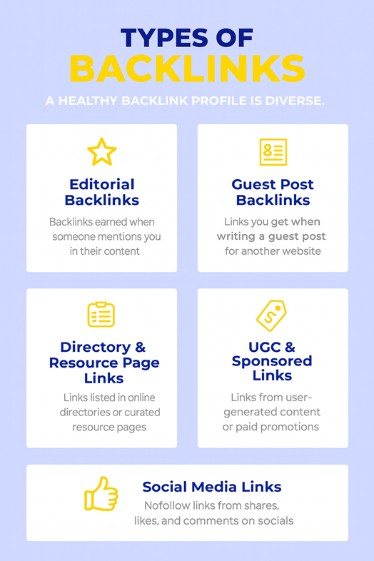
A healthy backlink profile is diverse. Relying on just one type of link is risky and unnatural. Understanding how many types of backlinks exist allows you to create a balanced strategy that mimics organic growth.
Editorial Backlinks
Editorial backlinks are the holy grail of SEO. These are links that other webmasters place naturally within their content because they genuinely value your resource. You do not pay for them or ask for them directly; you earn them by publishing high-quality content.For example, a journalist might link to your industry report as a source for their news article. Editorial links carry the highest weight because they are purely merit-based. They usually come from high-authority news sites, industry blogs, and educational institutions. Creating "link-bait" content—like original research, infographics, or free tools—is the best way to attract these coveted links over time.
Guest Post Backlinks
Guest posting involves writing an article for another website in your niche. In exchange for your content, the host site allows you to include a link back to your own site, usually in the body text or the author bio.While effective, guest posting requires quality control. Google has warned against low-quality guest posting used solely for link building. To do this right, you must write genuinely helpful articles for reputable sites. Avoid "guest post farms" that publish anything for a fee. The primary goal should be to provide value to the host site's audience, with the backlink being a secondary benefit that drives relevant traffic and authority.
Directory & Resource Page Links
Directories are lists of businesses or websites categorized by niche or location. While generic web directories are mostly obsolete and spammy, niche-specific directories (like a list of "Top SaaS Providers") and local citations (like Yelp or the Chamber of Commerce) are still valuable.Resource pages are curated lists of helpful links on a specific topic. For example, a university might have a "Career Resources" page linking to resume guides. If you have a high-quality guide, you can ask to be added. These links are static but stable, providing a consistent signal of relevance to search engines.
UGC & Sponsored Links
User-Generated Content (UGC) links come from forums, blog comments, and sites like Reddit or Quora. In the past, people spammed these for SEO, so Google introduced the rel="ugc" attribute to devalue them. They rarely help rankings directly but can drive excellent traffic if your contributions are helpful.Sponsored links are paid placements, such as banner ads or sponsored articles. Google requires these to be marked with rel="sponsored". Like nofollow links, they do not pass authority but are useful for branding and direct visits. Treating them as part of a holistic marketing mix is smarter than relying on them for SEO.
Social Media Links
Links from Facebook, Twitter, LinkedIn, and Instagram are almost always "nofollow." They do not count as traditional backlinks for ranking purposes. However, they are a critical part of the discovery engine.Social media links get your content in front of people who can give you editorial links. A viral tweet might be seen by a blogger who then writes about your content and links to it from their website. Therefore, social promotion is an indirect but powerful driver of link acquisition. It increases the "surface area" of your luck, making it more likely that the right people will see and link to your work.
Benefits of High-Quality Backlinks
We have discussed the "what" and "why," but let's look closer at the specific outcomes. When you successfully execute a link-building campaign, the results often compound. This helps answer how many backlinks do i need—it's not about a number, but about achieving these specific benefits.
Authority Building
High-quality backlinks serve as the foundation of your website's reputation. This is often referred to as "Domain Authority" (DA) or "Domain Rating" (DR) by software tools. While these are third-party metrics, they reflect a real concept: trust.When you build authority, you stop fighting an uphill battle. New content you publish gets indexed faster and ranks higher with less effort. A high-authority site might rank on page one for a keyword instantly, while a low-authority site might struggle for months. Building authority is a long-term investment that reduces the friction of all your future SEO efforts.
Keyword Ranking Growth
Backlinks are the fuel that pushes individual pages up the Search Engine Results Pages (SERPs). If you are stuck on page two for a valuable keyword, a few high-quality, relevant backlinks can often provide the nudge needed to break into the top three positions.This growth is specific. If you build links to your "accounting software" product page, that specific page will see ranking improvements for "accounting software" keywords. This allows you to be surgical with your strategy, focusing your link-building efforts on the pages that drive the most revenue or business value.
Long-Term Organic Traffic Gains
The ultimate goal of rankings is traffic. The beauty of organic traffic driven by backlinks is its sustainability. Unlike paid ads, which stop the moment you stop paying, a solid backlink remains live for years.A link from a high-traffic "best of" list or a popular tutorial continues to send referral traffic indefinitely. Furthermore, as your rankings improve, you capture steady organic search traffic day after day. This stability allows businesses to forecast growth and reduce their reliance on volatile paid marketing channels. Backlinks build a traffic asset that appreciates over time.
How to Evaluate Backlink Quality
Before you ask for a link, you must audit the potential source. Blindly building links can lead to a "toxic" profile that triggers penalties. You need a strict filter to ensure every link adds value.
Relevance Signals
Relevance is your first filter. Visit the target website and read their content. Is it written for the same audience you are targeting? If you sell pet supplies, a link from a generic "article directory" is worthless, but a link from a "dog training tips" blog is gold.Check the specific page where your link would appear. Does the topic align naturally with your content? If the connection requires mental gymnastics to explain, skip it. Search engines are getting better at understanding semantic context. They know when a link is truly a recommendation versus when it is just a paid placement on an irrelevant site.
Authority Metrics
Use SEO tools to check the site's metrics. Look for a Domain Authority (DA) or Domain Rating (DR) of at least 20-30 for new sites, and higher for established ones. However, be wary of fake metrics. Some sites manipulate these scores.A better check is organic traffic. Plug the domain into a tool like SEMrush or Ahrefs. Does the site get real traffic from Google? A site with a high DA but zero organic traffic is a huge red flag. It likely means the site has been penalized by Google. Only build links from sites that Google currently trusts enough to send traffic to.
Link Context & Surrounding Content
Finally, look at the editorial standards of the site. Do they link out to casino, porn, or essay-writing sites? These are "bad neighborhoods," and you do not want your link living next to them.Read the content quality. Is it original, well-researched, and human-written? Or is it thin, spun content filled with grammatical errors? A link is only as good as the content surrounding it. If the website publishes low-quality spam, a link from them sends a low-quality signal about your own site. Protect your brand by associating only with reputable publishers.
How to Build High-Quality Backlinks
Now for the actionable part. Learning how to get backlinks requires a mix of creativity, outreach, and persistence. Below are proven strategies that prioritize quality over easy wins. This is how to get quality backlinks that actually move the needle.
Create Useful Resources
People link to value. The most reliable way to earn links is to create "linkable assets." These are resources so useful that other bloggers and journalists feel compelled to reference them.Examples include original data studies, industry surveys, free online calculators, or definitive "ultimate guides" (like this one!). If you publish a report stating "40% of SEOs prioritize content," other writers will cite your statistic and link to you as the source. This is a passive link-building engine. Once the content ranks, people find it, cite it, and link to it naturally.
Broken Link Building
This is a classic tactic that solves a problem for the webmaster. The process answers the question of how to find backlinks by fixing the web. First, use a tool to find broken links (404 errors) on relevant industry blogs.Next, reach out to the site owner. Let them know they have a broken link on their page (which is bad for their SEO and user experience). Then, suggest your own high-quality resource as a replacement. You are being helpful, not just asking for a favor. Because you are helping them fix an error, the conversion rate for this strategy is often higher than standard cold outreach.
Answer Media & HARO Requests
Services like HARO (Help A Reporter Out) or Qwoted connect journalists with experts. Reporters from major publications (like Forbes, HuffPost, or industry news) often need quotes for their stories.Sign up as a source. When you see a query relevant to your expertise, send a quick, valuable pitch. If they use your quote, they will typically credit you with a backlink to your site. This is an excellent way to earn high-authority news links that are otherwise impossible to get. Speed and relevance are key here; reporters work on tight deadlines.
Competitor Backlink Replication
Your competitors have already done the hard work for you. By analyzing their backlink profiles, you can find sites that are already willing to link to businesses like yours.Use an SEO tool to view a competitor's backlinks. Filter for high-quality directories, guest post opportunities, or resource pages. If a blog reviewed your competitor's product, they might be interested in reviewing yours too. If they linked to a competitor's guide on "Email Marketing," pitch them your updated, more comprehensive guide. You are essentially replicating their winning roadmap.
Leverage Business Partnerships
You likely already have relationships with suppliers, distributors, manufacturers, or partner agencies. These are the "lowest hanging fruit" for link building.Reach out to your partners and ask if they can feature you on their "Partners," "Clients," or "Testimonials" pages. Offer to write a testimonial for their service in exchange for a link back to your site. Since the business relationship already exists, these links are easy to secure and highly relevant.
Digital PR
Digital PR involves creating newsworthy stories to pitch to journalists and bloggers. This goes beyond standard press releases. It often involves using data to tell a story about a trend.For example, if you are in the real estate niche, you could analyze data to find the "Most Affordable Cities for Millennials." Pitch this story to local news stations and real estate blogs. If the story picks up, you can earn dozens of high-authority links from news domains in a single campaign.
Networking & Community Engagement
SEO is often about who you know. actively participating in your industry community can lead to organic link opportunities. Join relevant Facebook groups, Slack communities, or LinkedIn discussions.Don't spam your links. Instead, share advice and build relationships with other site owners and influencers. When you eventually launch a major piece of content, you will have a network of friends willing to share and link to it. Genuine networking creates a "fan base" that supports your link-building efforts naturally.
Additional Link Generation Ideas
If the core strategies aren't enough, here are a few more specific angles to explore.
Directories & Local Listings
For local businesses, getting listed in trusted local directories is essential. Start with Google Business Profile, Bing Places, and major data aggregators. Then, find local business associations, Chambers of Commerce, or city-specific directories.Ensure your Name, Address, and Phone number (NAP) are consistent. These links help with "Local SEO," helping you show up in map packs. While they don't always pass massive authority, they are foundational trust signals for local search visibility.
Linkable Industry Data
We touched on this, but it deserves its own focus. Journalists love data but hate collecting it. If you can become the source of truth for industry stats, you win.Run a survey of your email list or customer base. Aggregate public data into a clean, easy-to-read chart. Publish a "State of the Industry" annual report. This type of content attracts links from other writers who need evidence to support their claims. It positions your brand as a thought leader.
Thought Leadership Content
Opinion pieces and "contrarian" takes can generate buzz and links. If everyone in your industry says "X is good," and you write a well-reasoned article on "Why X is actually bad," people will discuss and link to it.Podcasts and interviews are another form of thought leadership. Being a guest on a podcast often results in a backlink from the show notes. Actively pitch yourself as a guest to relevant podcasts in your niche to build authority and links simultaneously.
How to Audit & Maintain a Healthy Backlink Profile
Building links is half the battle; keeping your profile healthy is the other. The web rots; links break, and bad sites can link to you without permission. You need a maintenance routine, which includes knowing how to remove bad backlinks.
Get Backlink Data
You cannot manage what you do not measure. Use tools like Google Search Console (free) or Ahrefs/SEMrush (paid) to download your full backlink report.Do this quarterly. Look at the total number of referring domains and the velocity of new links. Are you gaining links steadily, or was there a sudden spike? A sudden spike could indicate a negative SEO attack (someone buying spam links to your site) or a viral piece of content. You need the data to know the difference.
Identify & Disavow Toxic Links
Scan your report for "toxic" links. These are links from spam sites, adult content, or known link farms. Most tools have a "Spam Score" or "Toxic Score" to help you identify them.If you find a large number of harmful links, you may need to use Google's Disavow Tool. This is an advanced feature that asks Google to ignore specific links when calculating your rankings. Be careful—disavowing good links by mistake can hurt your SEO. Only use this for clearly spammy, unnatural links that you cannot get removed otherwise.
Fix Broken Backlinks
Sometimes you lose backlinks because you changed a URL or deleted a page on your site. This is "link waste." The external site is linking to a 404 error page, so the authority is lost.Check your "Top Linked Pages" report for 404 errors. If you find a broken URL that has backlinks, immediately set up a 301 redirect to the most relevant live page. This reclaims the lost link equity and instantly restores the value of those backlinks.
Track New Backlinks
Set up alerts to track new backlinks as they come in. Tools can email you whenever you earn a new link.This allows you to nurture relationships. If a blogger links to you, send them a quick email saying "Thanks for the mention!" This small gesture can turn a one-time link into a long-term relationship. It also helps you spot spam attacks early, so you can deal with them before they become a massive problem.
Tools for Backlink Analysis
You need the right technology to execute these strategies. This answers how to search backlinks on google efficiently—by using tools that crawl the web better than manual searches can.
Moz Link Explorer
Moz is famous for creating the "Domain Authority" (DA) metric. Their Link Explorer tool is excellent for beginners. It provides a clean interface to check your DA, see who links to you, and analyze your anchor text.It also has a "Spam Score" feature that is very helpful for auditing your profile. Moz’s database is solid, and their free version offers a limited number of queries per month, making it accessible for small businesses.
SEMrush Backlink Analytics
SEMrush is a comprehensive marketing suite. Its backlink analytics tool is powerful and fast. It allows you to compare your profile side-by-side with up to four competitors.A standout feature is the "Backlink Audit" tool, which automatically flags potential toxic links and helps you generate a disavow file. It also integrates with your email for outreach campaigns, making it a good all-in-one choice for agencies and pros.
Ahrefs Backlink Checker
Ahrefs is widely considered to have the best and most active backlink index on the market. If a link exists, Ahrefs will likely find it first.Their "Link Intersect" tool is a game-changer. It shows you sites that link to your competitors but not to you. This is the fastest way to find high-probability link opportunities. Their metrics (DR and UR) are standard currency in the SEO industry.
Common Backlink Mistakes to Avoid
Even smart marketers make mistakes. Avoiding these pitfalls will keep your site safe from Google penalties.
Buying Links
The temptation to buy links is strong, but the risk is higher. Buying links from "private blog networks" (PBNs) or services like Fiverr is a direct violation of Google's Webmaster Guidelines.Google’s algorithms are sophisticated at detecting paid patterns. If caught, your site can be de-indexed (removed from Google entirely). Always focus on earning links. If money changes hands, the link should be marked as "sponsored" or "nofollow" to stay compliant.
Over-optimized Anchor Text
As mentioned earlier, do not force keywords into your links. If you are a lawyer and every single backlink says "best lawyer in Chicago," it looks unnatural.Google's Penguin algorithm update specifically targeted this type of over-optimization. Keep the majority of your anchor text branded ("Smith Law Firm") or generic ("visit website"). Let the keywords appear naturally in the surrounding text instead.
Low-quality Directories
Quantity does not beat quality. Submitting your site to 500 low-quality web directories will not help your ranking; it will likely hurt it.These sites are often "link farms" created solely to game the system. Google ignores or penalizes them. Stick to high-quality, human-edited directories that are relevant to your specific industry or city. If the directory accepts any submission automatically without review, avoid it.
Backlinks and Brand Visibility
Finally, look beyond just SEO metrics. Backlinks are a major component of your online brand presence.
Editorial Mentions
Sometimes you get mentioned without a link. These are "unlinked mentions." While they are not direct backlinks, they still build brand awareness.You can monitor these mentions using Google Alerts. When you see one, reach out to the writer and politely ask if they can turn the mention into a clickable link. It’s a simple win because they have already acknowledged your brand.
Why AI Platforms May Ignore Weak Brands
The future of search is AI (like ChatGPT or Google's SGE). These models are trained on data from trusted sources. If your brand is not linked to by authoritative sites, these models may not "know" you exist.Building a strong backlink profile ensures your content is part of the training data for these AI systems. A weak brand with no citations is likely to be ignored by the next generation of search engines.
How Backlinks Strengthen Brand Presence
Ultimately, backlinks put your brand in front of new audiences. When a user sees your name on their favorite blog, then on a news site, and then in a directory, it creates a "surround sound" effect.This familiarity breeds trust. Even if they don't click the link immediately, they are more likely to click your result in Google later because they recognize your name. Backlinks build the mental availability that drives long-term market share.
Conclusion
Backlinks remain the backbone of SEO authority. They serve as votes of confidence, traffic drivers, and trust signals that search engines cannot ignore. While the tactics for earning them have evolved—moving from spammy directories to high-value digital PR and content creation—the core principle remains: quality wins. By understanding what backlinks are, monitoring your profile, and consistently creating value that others want to cite, you can build a domain that dominates the search results for years to come.
Frequently Asked Questions
What is an example of a backlink?
An example of a backlink is if the New York Times writes an article about coffee and includes a blue, clickable link to your coffee shop's website. In this scenario, your website has received a "backlink" from the New York Times. If the link text (anchor text) says "best roasted beans," search engines will use that phrase to understand what your page is about.
How many backlinks do I need to rank?
There is no magic number. It depends entirely on your competition. If the top-ranking sites for your keyword have 50 high-quality backlinks, you will likely need a similar number to compete. However, quality matters more than quantity. One link from a high-authority university site (an .edu domain) can be worth more than 100 links from low-quality blogs. Use tools to analyze your competitors' profiles to set a realistic target.
How do I get backlinks from high-authority websites?
You must create content that is "newsworthy" or highly useful. High-authority sites do not link to basic product pages. They link to original data, breaking news, unique case studies, or exceptional free tools. Once you have this content, use "Digital PR" to pitch it to journalists and editors. You need to show them why their readers will care. Relationship building and consistently providing value are key to unlocking these prestigious links.
What's the difference between nofollow and dofollow links?
The difference is in the code instructions given to search engines. A dofollow link tells Google to pass authority (link equity) to the destination page, directly helping it rank. A nofollow link includes a tag (rel="nofollow") that tells Google not to pass authority. While dofollow links are better for pure ranking power, nofollow links are still valuable for generating traffic and building natural brand awareness.
How do I remove bad backlinks?
First, try to contact the owner of the website linking to you and politely ask them to remove the link. If you cannot find contact info or they ignore you, use Google's Disavow Tool. You can create a text file listing the bad domains and upload it to Google Search Console. This tells Google to ignore those specific links when calculating your ranking score. Use this carefully and only for truly toxic links.