
Understanding the right schedule for checking your Google rankings helps you spot issues early, measure progress reliably, and make smarter SEO decisions. Checking too frequently can lead to overreacting to daily noise, while checking too infrequently may let real problems go unnoticed. A balanced tracking routine highlights meaningful drops, steady gains, and competitive shifts, allowing you to focus on trends that matter and adjust your strategy effectively.
Why You Need to Track Your Rankings?
Here are the key reasons to track rankings:
Identifying issues early: Sudden drops in rankings often signal technical errors, penalties, or broken pages, and acting quickly can prevent significant traffic loss.
Spotting long‑term trends: Weekly or monthly tracking shows whether your SEO efforts are working consistently or need adjustment.
Understanding algorithm changes: Google regularly updates its search algorithm, so tracking lets you correlate ranking shifts with update dates and respond proactively.
Consistent monitoring ensures you base decisions on real trends rather than random fluctuations. Rankings can vary daily due to testing, personalization, and competitive activity, and a one‑off check may mislead you if you react to temporary noise. Regular data points help you identify genuine performance shifts and act with confidence. Tools can automate tracking and send alerts when key positions change, saving time and helping you focus on strategy instead of manual checks.
Whether you run local campaigns or global SEO efforts, understanding your ranking visibility tells you where your efforts pay off and where to invest next. Keywords that consistently rise or fall show you where to prioritize improvements.Regular tracking helps marketers base decisions on real data and avoid unexpected ranking changes.
How Often Should You Check Your Rankings?
Different SEO goals and situations require different tracking routines. The frequency you choose should reflect your priorities, competitive landscape, and how quickly ranking changes impact your business outcomes. Some sites benefit from near‑real‑time monitoring, while others only need periodic checks to assess long‑term trends.
Daily — When It’s Worth It
Daily ranking checks are valuable for campaigns with tight timelines or high stakes. For example, if you are launching a major product, running a local SEO push, or managing time‑sensitive promotions, checking ranks daily gives you the freshest data so you can respond quickly. Daily monitoring lets you detect shifts as soon as they happen and act before visibility losses translate into significant traffic or revenue drops. SEO experts note that competitive niches can experience position changes every day, and timely insight helps you stay ahead of rivals.
Many SEO tools provide daily updates automatically, so you don’t need to check manually. These frequent data points help you identify patterns that weekly snapshots might miss, especially in volatile niches where SERP features like featured snippets or local packs shift often. Daily tracking also helps you understand whether your recent work is having immediate impact, which is especially useful during intense campaign periods.
However, not every site needs daily rank checks. For smaller campaigns or stable niches where rankings don’t shift drastically day‑to‑day, daily fluctuation often reflects normal noise rather than meaningful changes. In these cases, focusing daily effort on your most important keywords while using weekly or monthly checks for the rest gives you a balanced view without overwhelming your team with minor movements.
Weekly/Biweekly — Best Default
For most websites, weekly or biweekly ranking checks strike a solid balance between insight and efficiency. Weekly tracking helps smooth out daily noise and reveals meaningful trends in how your SEO strategy is performing over time. Since rank changes can vary slightly every day, looking at weekly data gives you a more reliable sense of real progress. Many SEO professionals recommend checking rankings at least once a week to understand performance direction and catch significant shifts early.
Biweekly checks also make sense for sites that don’t need immediate responses. This cadence keeps you informed while reducing the workload associated with frequent data reviews. Biweekly monitoring works well when your keywords face moderate competition or when your site operates in a stable niche with slow, steady changes. Weekly or biweekly ranking reports can guide content updates, technical improvements, and competitor analysis, helping you plan your next optimization steps with confidence.
Using automated tools for weekly or biweekly tracking is especially helpful. You can configure alerts for significant ranking drops or spikes so you only investigate when important changes occur. This approach ensures you stay informed without reacting to every minor fluctuation, which aligns with best practices recommended by SEO experts who emphasize focusing on meaningful trends rather than daily noise.
Monthly — Strategy and Reporting
Monthly ranking checks are ideal for strategic reviews and reporting to clients or executives. A monthly perspective highlights long‑term trends and the impact of major SEO work, filtering out short‑term noise that daily or weekly checks might capture. Monthly tracking makes it easier to assess overall performance rather than reacting to every small shift, which is especially useful when preparing reports or planning larger initiatives.
Monthly tracking also aligns well with other SEO metrics like traffic, conversions, and revenue, which typically show meaningful changes on a monthly basis. These reviews often accompany broader SEO audits, competitor benchmarking, and quarterly planning sessions. By looking at ranking data month to month, you can identify seasonal patterns, evaluate the effectiveness of recent strategy changes, and spot sustained gains or declines.
For many SEO teams, combining monthly overviews with weekly or daily alerts for significant moves provides a comprehensive picture. Monthly tracking offers a long‑term perspective, while more frequent checks ensure you don’t miss important shifts that warrant immediate action. This blend helps SEO professionals stay strategic and proactive without being distracted by routine fluctuations.
What Factors Influence Your Tracking Choice?
Your ranking‑tracking frequency should align with the actual SEO dynamics of your website or niche rather than following a fixed schedule. Certain key factors influence how often you should check your rankings, helping you focus on meaningful changes instead of daily noise. These factors include keyword competitiveness and search volume, SERP volatility and algorithm updates, as well as your SEO goals and campaign type. Understanding how these factors interact ensures that you track the right metrics at the right time, maximizing the value of your SEO efforts.
Keyword Competition & Search Volume
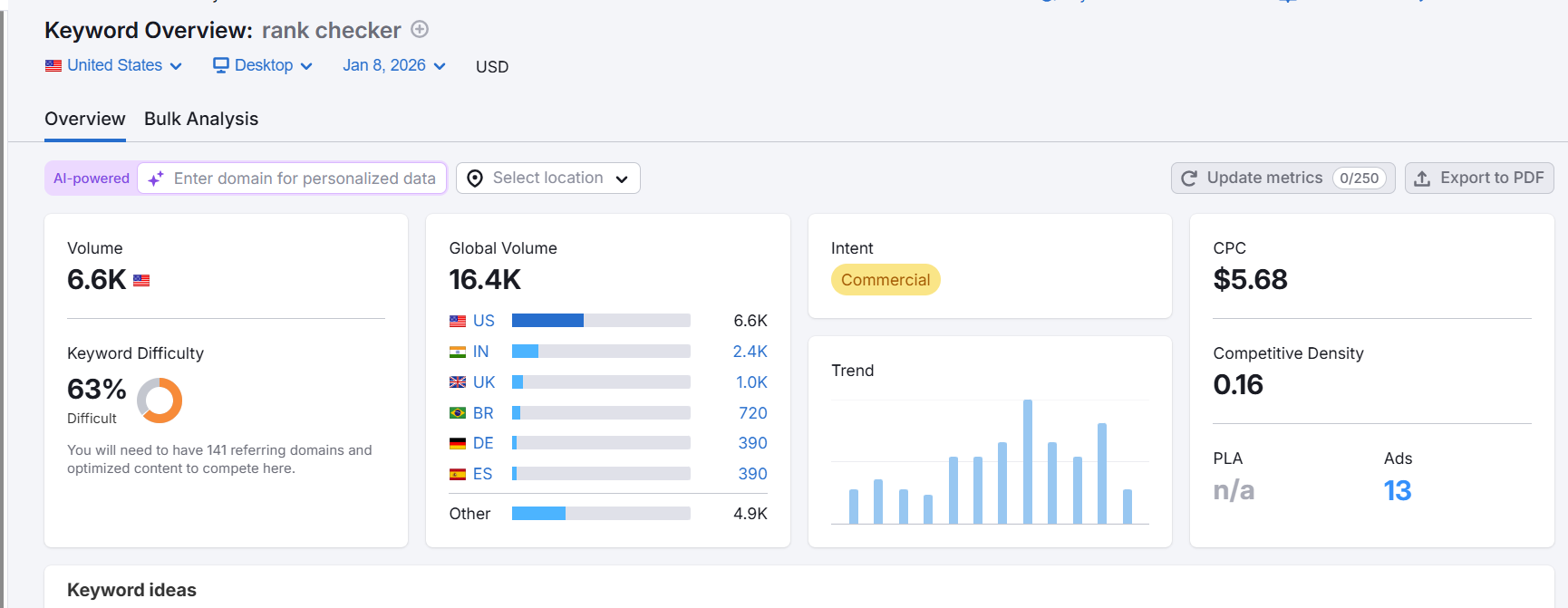
Keywords with high competition tend to shift positions more often because multiple sites are vying for the same top rankings. When competitors publish new content or earn backlinks, rankings for these high‑traffic terms can fluctuate frequently, sometimes even daily. In competitive scenarios like this, tracking these terms more often gives you an early warning of meaningful shifts and allows you to adjust your strategy in a timely manner.
For large keyword sets, SEO tools can automate the tracking process, eliminating the need for manual checks. Automated alerts let you focus on priority terms while the tool monitors less critical ones in the background. Conversely, keywords with lower competition or smaller search volumes usually move more slowly and predictably. In such cases, weekly or monthly tracking is often sufficient because minor daily changes are more likely to reflect normal variation rather than significant shifts.
Ultimately, your tracking cadence should reflect both the intensity of competition around your keywords and how quickly positions tend to change in your niche. High search volume often brings more fluctuation, meaning that terms most critical to your business goals may require closer, more frequent monitoring. This ensures that your attention is always aligned with opportunities that matter most.
SERP Volatility & Algorithm Updates
Search engine results are inherently dynamic. Google continuously updates its algorithms, tests new layouts, and introduces features such as featured snippets and local packs. These changes can cause rankings to shift even if your site remains unchanged. By understanding this volatility, you can avoid overreacting to normal SERP fluctuations and focus on genuine trends instead.
When volatility spikes — for example, around a major algorithm update or during seasonal trends — more frequent ranking checks can help you assess how your pages are responding. Some tracking tools provide SERP volatility metrics that highlight unusual movement, signaling when a deeper investigation is warranted.
Integrating volatility awareness into your tracking routine allows you to distinguish between actual ranking issues and short-term, algorithm-driven noise. Rather than checking obsessively every day, rely on these signals to determine when deeper analysis is necessary. By understanding the broader SERP environment, you make smarter decisions and avoid wasting effort on fluctuations that don’t reflect lasting trends.
SEO Goals & Campaign Type
Finally, your SEO objectives should guide how often you monitor rankings. Time-sensitive campaigns — such as new product launches or seasonal promotions — benefit from frequent checks to measure immediate impact and adjust strategies quickly if performance changes.
In contrast, long-term brand building and evergreen content strategies are better suited to weekly or monthly reviews. These intervals allow you to focus on broader trends rather than daily fluctuations, ensuring that your SEO actions remain aligned with long-term business goals.
By setting your tracking frequency based on how quickly ranking changes affect outcomes such as organic traffic, lead generation, or revenue, you can prioritize your efforts effectively. Keywords that closely correlate with key performance metrics may justify more frequent monitoring, whereas those with slower, less pronounced impacts can be tracked at longer intervals. This approach balances efficiency with insight, helping you make informed SEO decisions without unnecessary effort.
Conclusion
Track rankings at a pace that fits your goals: daily for urgent campaigns, weekly for trends, monthly for strategy. Use alerts and SEO tools to spot meaningful changes, focus on trends over noise, and take action to improve your search performance.
FAQS
How often should I check my Google rankings?
It depends on your goals and niche, but best practice is to check your rankings weekly or monthly to focus on meaningful trends rather than daily noise. Weekly checks help you spot real performance shifts, while monthly reviews are useful for reporting and long‑term strategy. Daily tracking can be useful in specific cases like campaign launches or competitive niches, but it’s not necessary for every site.
Is it useful to check rankings every day?
Daily ranking checks are generally not recommended for most websites because rankings naturally fluctuate from day to day. Too much frequency can lead you to overreact to normal variability. However, in competitive industries or during time‑sensitive campaigns (e.g., product launches), daily monitoring with SEO tools can provide timely insights.
Should all keywords be checked at the same frequency?
No. High‑competition or high‑priority keywords often change more frequently and may deserve closer monitoring than low‑competition or long‑tail keywords. Tailor your tracking frequency to keyword competitiveness and business impact.