
Search engine optimization, or SEO, helps websites attract users who are actively searching for answers, comparing options, or preparing to make decisions. When your pages rank at the top of organic results, you reach motivated visitors at the exact moment they need information—without paying for every click. SEO works by helping search engines understand your content, match it with the right queries, and display it to the most relevant audiences. This requires a combination of technical optimization, high-quality content, clear structure, strategic keywords, link authority, and strong user experience. When these elements work together, they increase your visibility, credibility, and ranking power. This guide explains how SEO functions and what strategies matter most, giving you a step-by-step understanding of how to build a complete and effective SEO approach.
What Is SEO? Definition, Purpose, and Core Concepts
SEO, or search engine optimization, refers to the practice of optimizing your website so it appears higher in unpaid search results. It helps search engines discover, understand, and rank your content based on relevance and quality. Anyone wondering "what does SEO stand for","what is SEO marketing", or "what is SEO in digital marketing" should understand that SEO connects users with meaningful content that meets their intent.
The purpose of SEO is to increase organic traffic by helping your pages appear for searches related to your products, services, or expertise. This increases brand trust, visibility, and user engagement. SEO works through several core pillars:
Relevance: Matching content to search queries.
Authority: Building trust through backlinks and brand reputation.
Technical Quality: Ensuring proper crawling, indexing, and performance.
User Experience: Providing helpful, clear, and easy-to-navigate content.
These components determine "what does SEO ranking mean" and help search engines decide whether your page deserves a top spot.
How SEO Helps Websites Gain Visibility and Traffic
SEO boosts visibility by placing your content in front of people actively searching for solutions. Higher rankings create more impressions and clicks because users trust organic results. This explains “how SEO work” and “how does SEO work on Google”—your content earns visibility through relevance, trust, and quality. Unlike paid ads, SEO traffic grows over time and stays consistent.
SEO vs. SEM vs. PPC — Key Differences
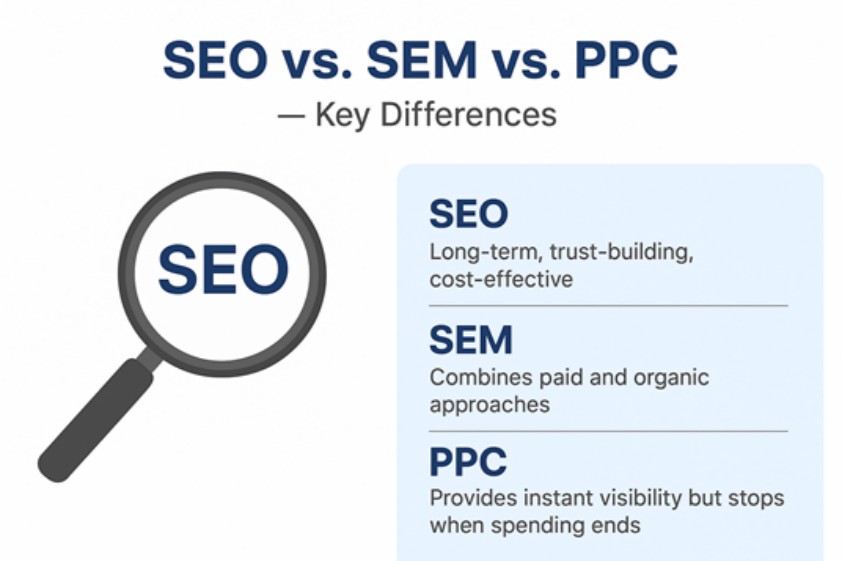
SEO focuses on organic rankings, while SEM includes both paid and organic search. PPC refers only to paid ads that charge for every click. Major differences include:
SEO: Long-term, trust-building, cost-effective.
SEM: Combines paid and organic approaches.
PPC: Provides instant visibility but stops when spending ends.
SEO builds long-term value, while PPC offers fast but temporary results.
Why SEO Matters: The Benefits of Search Engine Optimization
SEO remains essential because users trust search results. Strong rankings increase credibility and highlight your brand as a reliable source. SEO drives long-term visibility, engagement, and conversions without relying on continuous ad spend. Whether you're wondering "what is SEO services" or why brands invest in SEO, the answer lies in its sustainable growth potential.
Organic Traffic Growth and Sustainable Visibility
Organic search creates a steady and compounding stream of visitors because your content continues to appear for relevant queries long after it’s published. As your site earns more authority through quality content and backlinks, search engines begin ranking your pages for a broader range of keywords—including long-tail phrases and variations that bring in highly targeted users. This visibility grows naturally over time and doesn’t disappear when you stop spending money, unlike PPC. By aligning your content with search intent and improving overall performance, SEO allows your pages to show up exactly when users are researching, comparing options, or ready to take action. This makes organic traffic one of the most dependable and cost-effective acquisition channels.
Brand Credibility, Trust, and Higher User Engagement
High search rankings signal that your brand is reputable, authoritative, and relevant to user needs. People trust Google’s top results because they assume these pages offer accurate, helpful, and up-to-date information. When users land on a page that loads quickly, answers their questions clearly, and provides a smooth browsing experience, they are far more likely to stay longer, click deeper into your site, and eventually convert. Strong SEO also enhances engagement by improving readability, page structure, and mobile experience—all elements that make your content easier to digest. Over time, this combination of trust and usability strengthens brand loyalty and increases the likelihood of returning visitors.
Long-Term ROI Compared With Paid Advertising
Paid advertising delivers quick traffic, but it only works as long as you keep paying. Once the budget stops, impressions, clicks, and conversions drop to zero. SEO works differently. When a website builds high-quality content, earns backlinks, and maintains strong technical performance, the pages continue to rank on search engines for months or even years. This gives SEO a long-term return on investment that paid ads cannot offer.
Although SEO requires upfront work and continuous optimization, the long-term benefits outweigh the initial effort. Each optimized page functions like a digital asset that keeps attracting organic visitors without recurring ad spend. As organic traffic grows, the cost per acquisition decreases, and the website becomes less dependent on paid channels. This long-term stability makes SEO a more sustainable strategy for businesses aiming to reduce marketing costs while maintaining consistent traffic and conversions.
How Search Engines Work
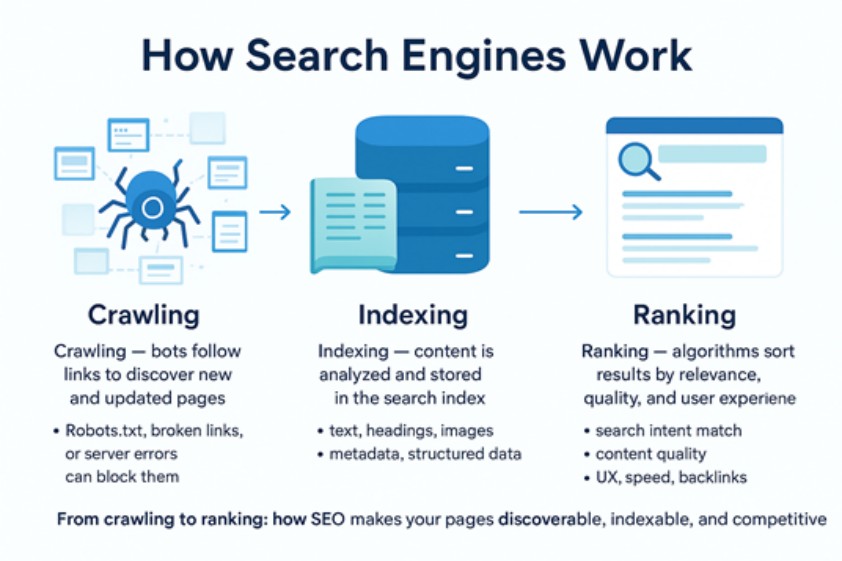
To understand “what is SEO and how it works examples”, you need the basics of how search engines deliver results. Search engines follow three core processes: crawling, indexing, and ranking. Each process determines how your pages appear in the search ecosystem.
Crawling — How Search Engines Discover Web Pages
Search engines rely on automated bots known as crawlers or spiders to find new and updated pages across the web. These crawlers move from link to link, scanning each page’s HTML to understand its content, structure, and media elements. If your website has an organized internal linking system, crawlers can navigate it more efficiently. However, if a page blocks crawlers through robots.txt, login walls, broken links, or server errors, the bot cannot access it. As a result, the page becomes invisible to search engines. Ensuring crawlability is the first step in making any content eligible to appear in search results.
Indexing — How Content Is Stored and Organized
After a crawler discovers a page, the next step is indexing. Search engines analyze the page’s text, headings, images, metadata, and structured data to understand the topic and purpose. This information is then stored in the search engine’s index, which functions like a massive digital library. Clear site architecture, consistent formatting, and well-written content help search engines process your pages more efficiently. If your content is unclear, duplicated, or blocked by technical issues, it may fail to enter the index. Without being indexed, the page cannot rank. Proper indexing ensures your content becomes searchable and accessible to users.
Ranking — How Algorithms Determine Search Results
Once a page is indexed, search engines evaluate it using complex ranking algorithms. The goal is to present the most relevant, high-quality, and helpful results for each query. Several key factors influence rankings: how closely the content matches the search intent, the depth and accuracy of the information, the overall user experience, mobile-friendliness, site speed, and engagement signals. Backlinks from trusted websites also act as endorsements that strengthen your site’s authority. Pages that demonstrate expertise, relevance, and usefulness typically earn higher positions. Consistently aligning your content with these ranking signals increases visibility, builds authority, and helps your website attract stable organic traffic over time.
Key Types of SEO You Need to Know
Technical SEO — Speed, Structure, and Performance
Technical SEO focuses on optimizing your website’s infrastructure to make it easy for search engines to crawl, index, and understand your content. This includes improving page speed, ensuring mobile responsiveness, implementing structured data markup, creating and submitting XML sitemaps, optimizing robots.txt files, and maintaining a clean site architecture. These elements collectively improve site performance, user experience, and search engine visibility. Neglecting technical SEO can prevent your site from ranking effectively, regardless of how good your content is.
On-Page SEO — Content, Keywords, and HTML Optimization
On-page SEO involves optimizing content and HTML elements on your site that directly affect search engine rankings. Key areas include keyword research and placement, crafting compelling title tags and meta descriptions, organizing content with a clear heading structure (H1, H2, H3), using internal linking strategically, adding descriptive alt text for images, and maintaining clean, readable URLs. By refining these factors, you improve your site’s relevance for targeted queries, help search engines understand your content better, and create a more user-friendly experience that encourages longer engagement.
Off-Page SEO — Backlinks, Authority, and Trust Signals
Off-page SEO refers to external strategies that build your website’s credibility, authority, and trustworthiness in the eyes of search engines. This includes acquiring high-quality backlinks from reputable websites, earning brand mentions on relevant platforms, guest posting on authoritative blogs, engaging in digital PR campaigns, and cultivating social proof such as reviews and endorsements. These off-site signals show search engines that your website is trustworthy and valuable, ultimately improving rankings. Strong off-page SEO can often have a bigger influence on rankings than on-page optimization alone.
Essential SEO Processes and Strategies
Keyword Research — Understanding Intent and Opportunity
Keyword research identifies the terms and phrases your target audience uses to search for information, products, or services. It involves analyzing search volume, search intent, keyword difficulty, and long-tail opportunities to prioritize which keywords to target. Understanding intent is crucial because it guides the creation of content that satisfies user needs, whether informational, transactional, or navigational. Thorough keyword research ensures your SEO strategy is focused on high-potential opportunities, prevents wasted effort on low-value keywords, and helps structure content to match the way people actually search online.
Competitor Analysis and SERP Analysis
Competitor analysis helps you understand what top-performing websites in your niche are doing well and what gaps you can exploit. It involves examining their ranking content, backlink profiles, site structure, and the presence of SERP features such as featured snippets or People Also Ask boxes. By studying these elements, you can identify opportunities to outperform competitors, refine your content strategy, and optimize your website for both search engines and user experience. SERP analysis also shows the evolving search landscape, guiding your SEO priorities.
Site Audits — Fixing Technical and On-Page Issues
Conducting regular SEO audits ensures your site remains optimized and free from errors that may harm rankings. Audits check for broken pages, slow-loading speed, crawlability issues, thin or outdated content, missing metadata, duplicate content, and internal linking problems. They also assess user experience factors such as mobile friendliness and page structure. Fixing these issues improves indexing, enhances performance, and increases the likelihood of ranking for relevant keywords. A consistent audit schedule helps detect problems early and maintain the health and competitiveness of your website.
Creating SEO-Optimized Content
Search Intent and Helpful Content
Creating content that satisfies search intent is essential for SEO success. Helpful content addresses user questions clearly, provides valuable solutions, and anticipates follow-up queries. It may include guides, tutorials, lists, case studies, or answers to common problems. Meeting user intent increases engagement, reduces bounce rates, and improves rankings. Additionally, content should demonstrate authority, accuracy, and clarity, which helps search engines recognize it as trustworthy. Prioritizing helpful content ensures your website becomes a reliable resource in your niche.
Structuring Content with Titles, H2s, and H3s
A well-structured page enhances readability and SEO. Use a single H1 to represent the main topic, followed by logically ordered H2s and H3s to break down content into digestible sections. Bullet points, numbered lists, and short paragraphs make content easier to scan. Proper structure not only improves user experience but also helps search engines understand the hierarchy and relevance of information. Clear headings allow search engines to create rich snippets and increase the chance of ranking for related queries, while readers benefit from intuitive navigation and comprehension.
Updating and Refreshing Existing Pages
Regularly updating content keeps your website relevant and authoritative. Refreshing pages may involve adding new examples, statistics, internal links, multimedia, or expanded explanations. Updating ensures accuracy, aligns with current trends, and improves user satisfaction. Search engines reward fresh, updated content, particularly for competitive topics. Neglecting content updates can result in declining rankings over time, while consistent improvements signal authority and trustworthiness, encouraging higher engagement and better performance in search results.
On-Page Optimization Best Practices
Title Tags, Meta Descriptions, and Headings
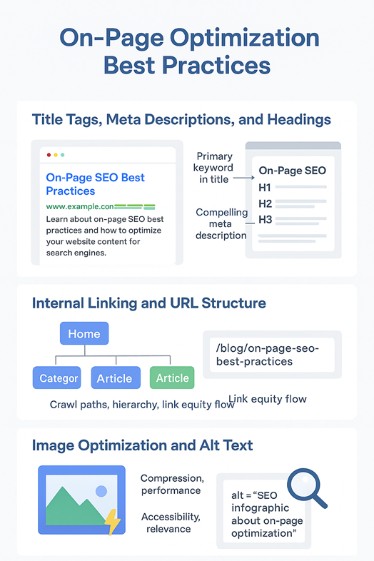
Title tags, meta descriptions, and headings are critical on-page SEO elements that help search engines understand your content. Titles should include primary keywords and clearly communicate the page topic. Meta descriptions provide concise summaries to entice clicks from the search results. Headings organize content logically, improving readability and crawlability. Properly optimized on-page elements ensure relevance, boost click-through rates, and support rich results in search engines. They also provide a better experience for users by making content easy to scan and comprehend.
Internal Linking and URL Structure
Internal linking guides visitors through your site while signaling to search engines the importance of certain pages. Strategic linking connects related content, distributes authority across pages, and improves crawl efficiency. Clean, descriptive URLs enhance user experience, make links easier to share, and provide contextual clues about the page topic. A strong internal linking strategy combined with optimized URL structures strengthens site hierarchy, reinforces keyword relevance, and ensures that search engines can index your content effectively.
Image Optimization and Alt Text
Optimizing images impacts both user experience and SEO. Compressing images reduces load times, improving site speed and Core Web Vitals. Descriptive alt text helps search engines understand the content of images, providing accessibility for visually impaired users and increasing the likelihood of appearing in image search results. Additionally, properly named image files and structured captions contribute to context and relevance. Image optimization balances performance and relevance, supporting overall page quality and enhancing rankings.
Off-Page SEO Strategies
Link Building and Earning Authoritative Backlinks
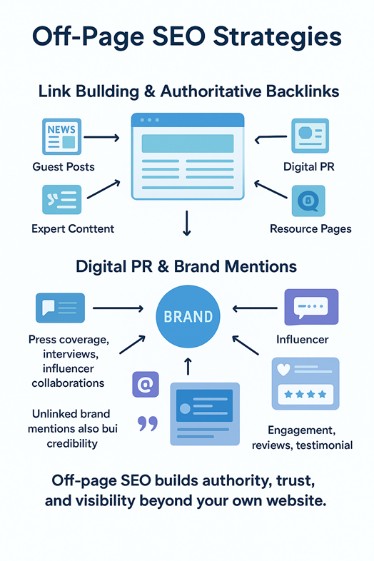
Backlinks are one of the most influential ranking factors. Earning links from reputable websites signals authority and trustworthiness. Effective strategies include guest posting on relevant blogs, digital PR campaigns, producing expert content that naturally attracts links, and building resource pages that others reference. Focus on quality rather than quantity, as low-quality links can harm rankings. A strong backlink profile improves domain authority, increases referral traffic, and strengthens search engine confidence in your content.
Digital PR and Brand Mentions
Digital PR campaigns promote your brand across online media, increasing awareness and generating authoritative mentions. Even unlinked mentions can signal credibility to search engines. Activities include press releases, interviews, collaborations with influencers, and featured content on reputable websites. High-quality brand mentions contribute to domain authority, boost trust, and can indirectly generate backlinks. Digital PR is an essential complement to content marketing and link-building strategies, positioning your brand as a thought leader in your niche.
Social Signals and Reputation Building
Social media activity influences visibility and user engagement indirectly. Shares, comments, and likes expand reach, attract new audiences, and create opportunities for backlinks. Reviews, testimonials, and endorsements reinforce credibility and authority. Search engines consider these signals when evaluating the trustworthiness of a website. Maintaining a strong online reputation across platforms establishes your brand as reliable, encourages user interaction, and enhances the overall effectiveness of your SEO strategy.
Technical SEO Foundations
H3: Mobile-Friendly Design and Core Web Vitals
Mobile-friendliness and Core Web Vitals are critical for ranking and user experience. Core Web Vitals include loading speed (Largest Contentful Paint), interactivity (First Input Delay), and visual stability (Cumulative Layout Shift). Mobile-friendly design ensures content is accessible and readable across devices. Meeting these standards improves engagement, reduces bounce rates, and satisfies Google’s algorithm requirements. Neglecting technical performance can result in poor rankings and lost traffic, even if content quality is high.
Site Structure, Sitemaps, and Robots.txt
A well-organized site structure helps search engines efficiently crawl and index your content. XML sitemaps provide a roadmap of your pages, while robots.txt files control which pages should not be crawled. Clear navigation, logical hierarchy, and internal linking ensure that all valuable pages are discoverable. Proper technical setup enhances both user experience and SEO performance, allowing search engines to prioritize high-value content and improve overall website visibility in search results.
HTTPS, Security, and Page Experience
HTTPS secures your website and protects user data, which is a trust signal for both users and search engines. Safe, stable, and fast-loading pages create a positive page experience, reducing bounce rates and improving engagement. Search engines favor secure sites and prioritize them in rankings. Regular security updates, SSL certificates, and safe coding practices maintain reliability. A technically sound and secure website demonstrates professionalism and reinforces credibility in the eyes of both visitors and search engines.
Understanding Modern SERP Features
Featured Snippets and Knowledge Panels
Featured snippets provide direct answers at the top of search results, while knowledge panels display essential information about brands or topics. Optimizing content to appear in these features increases visibility, click-through rates, and credibility. Structured data, concise answers, and clear formatting help search engines recognize relevant content. Appearing in SERP features also positions your brand as an authoritative source, attracting more organic traffic and enhancing overall SEO performance.
AI Overviews, PAA, and Rich Results
AI-generated summaries, People Also Ask (PAA) boxes, and rich results enhance search visibility by highlighting helpful content. Rich results may include review stars, FAQs, or images that stand out in search listings. Optimizing for long-tail queries, structured content, and schema markup improves the likelihood of appearing in these features. Leveraging these opportunities increases brand exposure, attracts targeted traffic, and enhances user experience, ultimately supporting higher rankings and engagement.
How to Measure SEO Success
Tracking Traffic, Rankings, and Conversions
Measuring SEO success involves monitoring organic traffic, keyword rankings, and conversion metrics. Traffic analysis identifies which pages attract visitors and which sources are most effective. Ranking tracking helps determine the effectiveness of SEO strategies over time. Conversions, such as form submissions, purchases, or newsletter sign-ups, reveal how well your website turns visitors into leads or customers. Regular analysis enables data-driven decisions, optimization of underperforming content, and strategic planning for long-term growth.
Using Tools: Google Search Console, Google Analytics, and Others
SEO tools provide actionable insights for improving website performance. Google Search Console monitors indexing, search queries, and technical issues. Google Analytics tracks user behavior, engagement, and conversions. Tools like Ahrefs, Semrush, or Moz help with keyword research, backlink analysis, and competitor insights. Using these tools effectively allows you to evaluate your SEO efforts, identify opportunities for improvement, and make informed decisions that drive measurable results and stronger rankings.
Common SEO Mistakes to Avoid
Keyword Stuffing and Thin Content
Keyword stuffing involves overloading pages with keywords, which reduces readability and can lead to penalties. Thin content provides little value to users and fails to satisfy search intent, resulting in low engagement and poor rankings. Focus on creating informative, well-structured content that naturally incorporates keywords while delivering meaningful information. Avoid shortcuts that compromise user experience, as search engines increasingly prioritize quality and relevance over mere keyword density.
Poor Technical Infrastructure
Slow website speed, crawl errors, broken links, and non-responsive designs harm both user experience and search engine rankings. Technical issues prevent search engines from properly indexing your content and frustrate visitors, increasing bounce rates. Regular audits, performance optimization, and mobile-friendly design are essential to maintain a strong technical foundation. Websites with robust infrastructure gain higher rankings, better user engagement, and improved overall SEO performance.
Ignoring Search Intent or User Experience
Failing to address search intent leads to content that does not satisfy users’ needs, causing poor engagement and low rankings. Prioritizing user experience—clear navigation, readable formatting, fast loading, and relevant information—is essential. Content should solve real problems and provide a seamless experience across devices. Search engines increasingly reward pages that meet intent and deliver high-quality experiences, making this a crucial aspect of any SEO strategy.
Conclusion
SEO builds sustainable visibility, authority, and long-term growth. When you combine technical optimization, strong content, user experience, and backlinks, search engines reward your site. With consistent updates and a clear strategy, SEO becomes one of your most valuable digital assets.
FAQs
How long does SEO take to work?
SEO typically shows noticeable results within three to six months, though the exact timing depends on several factors. These include the quality and frequency of content updates, the competitiveness of your industry or target keywords, the strength of your backlink profile, and the overall authority of your website. Patience and consistent optimization are key to long-term success.
Is SEO free or paid?
SEO itself does not require paying search engines to rank your content. Organic rankings are free to achieve. However, many website owners invest in tools, professional services, or advertising to support SEO efforts. Paid tools can help with keyword research, competitor analysis, and performance tracking, making the process more efficient but not strictly mandatory.
Can you do SEO yourself without hiring an agency?
Yes, website owners can perform SEO themselves with research, planning, and consistent effort. Learning best practices, analyzing keywords, optimizing content, and monitoring performance are achievable without professional help. Agencies can accelerate growth by applying advanced strategies, technical fixes, and experience, but self-managed SEO is entirely possible for those willing to dedicate time and attention to it.
What is the most important factor in SEO?
The most important SEO factors revolve around relevance, high-quality content, and excellent user experience. Content should answer user questions thoroughly and accurately, while the site must be fast, mobile-friendly, and easy to navigate. These elements build trust with both users and search engines, which is crucial for achieving higher rankings and long-term organic success.