
Schema markup is structured data code that labels the entities and facts on your pages so search engines can understand and feature them. That sounds straightforward, yet the reality is messier. Many websites either ignore schema entirely or implement it in ways that don’t align with visible content or current search guidelines. The result? Missed rich results, weaker entity signals, and lost opportunities in AI-driven search experiences.
This guide cuts through that confusion. It explains what schema is, why it matters in 2026, which types deserve priority, how to implement them correctly, and how to measure real impact—without leaning on outdated tactics or myths.
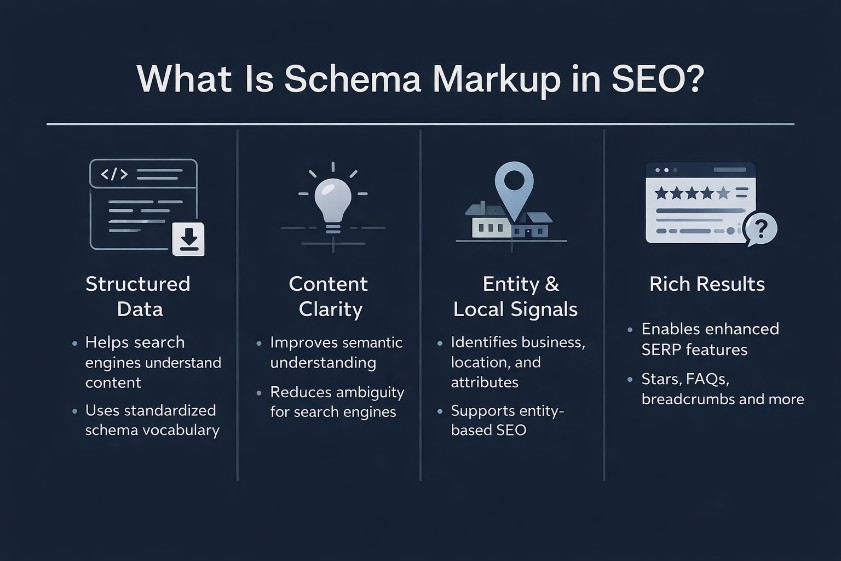
What Is Schema Markup in SEO?
Schema.org and structured data, explained
Schema markup refers to machine-readable annotations added to web pages using the Schema.org vocabulary. In simple terms, it's a standardized way to describe what a page is about—people, products, organizations, events, places, and the relationships between them. When discussing *what is schema in SEO*, it helps to think beyond code and focus on meaning. Schema markup translates human-readable content into signals that machines can process consistently.
Structured data is the broader concept. It includes any organized data format that helps systems interpret information. Schema markup is one implementation of structured data, specifically designed for search engines. Schema.org itself is a collaborative project supported by Google, Bing, and other major platforms, offering thousands of types and properties.
It's also important to separate schema from similar-looking standards. Open Graph and Twitter Cards are structured, but they're meant for social sharing previews, not search understanding. Schema markup, by contrast, feeds directly into how search engines interpret entities and eligibility for rich results.
How search engines use schema (knowledge graphs, rich results, AI)
Search engines don't read pages the way humans do. They parse content, extract entities, and try to resolve ambiguity. Schema markup accelerates that process. By providing explicit labels, it helps engines connect your content to existing entities in their knowledge graphs.
Google primarily consumes JSON-LD schema markup to enhance understanding and determine eligibility for rich results. These include visual enhancements like stars, prices, breadcrumbs, and logos, but the impact goes deeper. Structured data helps engines decide how content fits into AI Overviews and other generative features by clarifying context and relationships.
For example, an article schema with clear author, datePublished, and about properties reduces uncertainty about credibility and topical focus. A product schema with offers and availability removes guesswork. Over time, these signals reinforce entity associations, which matters as search becomes more entity- and AI-driven.
Core building blocks: types, properties, @context, @id, sameAs
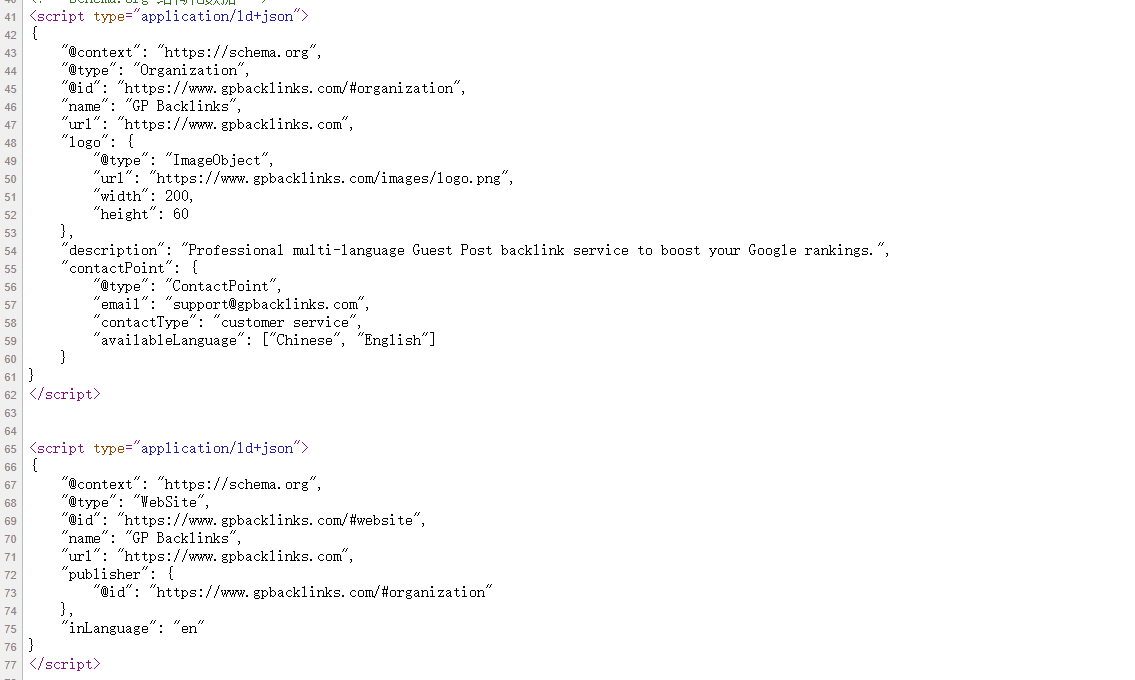
Every schema implementation relies on a few core components. The `@context` defines the vocabulary, almost always set to `https://schema.org`. The `@type` specifies what the entity is, such as Article, Product, or Organization. Properties then describe attributes of that entity, some required and others recommended.
The `@id` plays a critical role in an entity-first approach. It acts as a persistent identifier, allowing the same entity to be referenced across multiple pages. Without stable `@id` values, search engines may treat repeated mentions as separate entities. The `sameAs` property extends this by linking to official profiles, such as Wikipedia, LinkedIn, or a Google Business Profile.
Advanced properties like `about` and `mentions` help connect related entities. Together, these building blocks allow schema markup to function as more than isolated snippets—it becomes a site-level knowledge graph that search engines can rely on.
Why Schema Matters for Search and AI
Rich results, visibility, and CTR gains
Schema markup doesn't just make pages easier to understand; it makes them more attractive in search results. Rich results—stars, prices, FAQs, breadcrumbs—add visual weight and clarity. Even when rankings don’t change, these enhancements often increase click-through rates.
Data from multiple case studies shows that pages eligible for rich snippets frequently outperform plain listings. Product schema displaying price and availability reduces friction. Breadcrumb schema clarifies site structure. Organization schema with a logo builds brand recognition. These gains compound over time, especially on competitive SERPs.
When evaluating *what is schema in SEO*, the practical takeaway is simple: schema influences how listings look and how users interact with them, not just how engines interpret them.
Is schema a ranking factor?
This question comes up constantly, and the answer hasn't changed. Schema markup is not a direct ranking factor. Adding structured data alone won’t move a page from page two to page one.
However, dismissing schema on that basis misses the point. Schema improves disambiguation, helps search engines understand intent, and unlocks eligibility for rich results. Those outcomes often lead to higher engagement, stronger brand signals, and better performance metrics—all of which support SEO goals indirectly.
In 2026, schema’s role in AI-driven features makes this distinction even more important. Clear entity definitions help content get selected and summarized accurately, which can influence visibility beyond traditional rankings.
Schema Formats and Implementation
JSON-LD vs microdata vs RDFa
Schema markup can be implemented in three formats: JSON-LD, microdata, and RDFa. Microdata and RDFa embed properties directly into HTML elements using attributes. While functional, they tend to be brittle. Design changes or template updates can easily break the markup.
JSON-LD, on the other hand, lives in a separate script block. It doesn’t interfere with HTML structure and is far easier to maintain. For that reason, Google explicitly recommends JSON-LD for most use cases. It’s cleaner, more scalable, and less prone to errors during site updates.
When teams ask what format to choose in 2026, the answer is almost always JSON-LD unless there’s a legacy constraint.
Step-by-step JSON-LD setup with reusable snippets
Effective implementation starts with choosing the correct type. An article page shouldn’t carry product schema, and a category page shouldn’t masquerade as a product. Next comes mapping visible content to schema properties. Every claim in markup must be verifiable on the page.
The JSON-LD script can be placed in the head or body. Assign a stable `@id` to each entity, link official profiles with `sameAs`, and ensure naming consistency across pages. Reusable snippets help standardize this process.
Common examples include:
* Organization schema with name, logo, url, and sameAs
* Article schema with headline, author, datePublished, image
* Product schema with offers, price, availability, aggregateRating
* LocalBusiness schema with address, openingHours, and telephone
Consistency across templates is what turns isolated markup into a coherent system.
Validation and debugging workflow
Validation is non-negotiable. Google’s Rich Results Test checks eligibility for enhancements, while the Schema.org Markup Validator verifies syntax and structure. Search Console adds another layer, showing enhancement reports and indexing status.
Debugging usually reveals familiar issues: missing required fields, incorrect nesting, or mismatches between markup and visible content. Duplication is another common problem, especially when multiple plugins inject overlapping schema.
A disciplined workflow helps. Fix issues systematically, document changes, retest, and monitor Search Console for updates. Schema is not a set-and-forget task; it’s part of ongoing technical SEO hygiene.
Core Schema Types to Prioritize
Organization and Article for most sites
For the majority of websites, Organization and Article schema deliver the highest baseline value. Organization schema establishes brand identity. It should include name, logo, URL, contact information, and sameAs links, all tied together with a canonical @id.
Article schema supports editorial and blog content. Required properties like headline, datePublished, image, and author improve clarity and eligibility for rich results. Using about and mentions properties helps connect articles to known entities, reinforcing topical authority.
Together, these types form the backbone of an entity-first schema strategy.
Product, Offer, and Review for ecommerce
Ecommerce sites benefit most from Product schema paired with Offer data. Accurate prices, availability, and currency reduce friction for users and search engines alike. When eligible, aggregateRating and review schema add social proof—but only when they comply with policy.
Merchant Listings depend heavily on data quality. Aligning Product schema with Merchant Center feeds improves consistency and supports Shopping experiences. Including GTINs where possible further strengthens product identification.
Duplication is a recurring risk here. Themes, apps, and plugins often generate overlapping markup, which needs to be consolidated to a single authoritative source.
LocalBusiness essentials for SMBs
LocalBusiness schema is critical for small and medium businesses serving specific areas. Name, address, phone number, openingHours, and geo coordinates should match Google Business Profile data exactly. Inconsistencies weaken trust signals.
Optional review data can be added where appropriate, along with sameAs links to official profiles. When implemented cleanly, LocalBusiness schema reinforces local relevance and supports visibility in map and local search features.
Common Mistakes, Measurement, and Governance
Frequent errors and how to fix them
Most schema problems aren’t exotic. They’re basic implementation mistakes repeated at scale. Invalid types, missing required properties, incorrect nesting, and content mismatch top the list. Mixed or unstable @id values create entity confusion, while duplicate markup from multiple sources causes conflicts.
Fixes start with documentation. Follow Schema.org and Google guidelines, map markup to visible content, and standardize identifiers. One page, one source of truth for schema. After fixes, retest everything.
Measuring impact with Search Console and analytics
Schema success should be measured, not assumed. Search Console’s Performance report can be segmented by search appearance to compare rich results against standard listings. CTR, impressions, and clicks before and after implementation tell a clearer story than rankings alone.
Enhancement reports reveal coverage and errors over time. Linking schema deployments to analytics events or ecommerce tracking connects visibility gains to conversions. Annotating changes helps separate schema impact from algorithm updates or seasonality.
Scaling schema: QA, versioning, and maintenance
As sites grow, schema needs governance. Establish specifications per template, version control JSON-LD snippets, and include automated validation in CI pipelines. Monitoring alerts catch breakages early, and rollback procedures limit risk.
CMS-specific discipline matters too. WordPress sites should lock plugin settings to avoid overlap. Shopify sites need regular audits of theme and app markup. Wix users should rely on Advanced SEO structured data features. GTM injection remains a last resort for core types due to timing and duplication risks.
Conclusion
Schema markup clarifies content for search engines, enabling rich results and stronger entity understanding. The most effective strategies focus on high-impact types, clean JSON-LD implementation, and rigorous validation tied to measurable outcomes. An entity-first approach—built on stable @id values and consistent sameAs links—lays the foundation for long-term visibility in both traditional search and AI-driven experiences.
Download the free schema implementation checklist and run key pages through the Rich Results Test and Schema.org Validator. Then book a consultation to set up an entity-first schema strategy that aligns with your site’s goals and scale.
FAQS
Does schema markup improve rankings or just CTR?
data-start="13402" data-end="13405"/>Schema is not a direct ranking factor; it boosts eligibility for rich results and improves CTR, visibility, and AI understanding, which can indirectly drive more traffic and conversions.
What’s the difference between JSON-LD, microdata, and RDFa?
JSON-LD is a separate script block, preferred by Google and easier to maintain. Microdata and RDFa embed attributes in HTML and are more fragile during site updates.
How do I add schema to WordPress and Shopify?
WordPress sites typically use plugins like Yoast, Rank Math, or Schema Pro while avoiding duplication. Shopify relies on theme JSON-LD and apps, with regular audits for accuracy.
Which schema types should ecommerce sites use?
Product with Offers and optional AggregateRating or Review (policy-compliant), Breadcrumb, Organization, and Article for blog content, aligned with Merchant Center data.
How do I test if my schema is working?
Use Google’s Rich Results Test and the Schema.org Validator, then review Search Console Enhancements and Performance by Search Appearance to confirm eligibility and impact.