
In digital marketing, understanding the difference between SEO and SEM is essential, as both strategies aim to drive traffic through search engines. The distinction goes beyond paid versus organic traffic, also involving factors like cost, speed of results, sustainability, and strategic use. By examining these differences, you can grasp their advantages, limitations, and best application scenarios—helping beginners and businesses alike choose the most effective way to promote their websites.
What Are SEO and SEM?
To understand the difference between SEO and SEM, you must start with their definitions.
【What Is SEO】
SEO (Search Engine Optimization) refers to the practice of improving a website’s visibility in search engine results through organic (non-paid) methods. The main goal is to help a website rank higher on search engines like Google, so more users can find it naturally when they search for relevant topics. Key SEO Methods Include:
Keyword research and placement
Identify the words and phrases users search for, then use them naturally in titles, headings, and content.
Example: using "best SEO tools" in a blog post targeting that topic.
Content optimization
Create high-quality, useful, and well-structured content that answers users’ questions clearly.
Example: writing in-depth guides, FAQs, or how-to articles.Technical optimization
Improve website performance and structure, such as page speed, mobile-friendliness, and crawlability.
Example: optimizing site loading time or fixing broken links.Link building
Gain links from other reputable websites to improve authority and trust.
Example: earning backlinks through guest posts or expert citations.
【What Is SEM】
SEM (Search Engine Marketing) refers to marketing activities that promote websites through search engines, mainly by using paid advertising. SEM includes SEO, but its most distinctive feature is pay-per-click (PPC) advertising, where you pay each time a user clicks on your ad.
What SEM Includes:
SEO (Search Engine Optimization)
Improves rankings through organic, unpaid methods.
PPC advertising (Pay Per Click)
Buys visibility in search results through keyword bidding.
How SEM Works:
Advertisers bid on specific keywords.
Search engines display ads at the top or bottom of search results.
You pay only when someone clicks your ad.
Example:
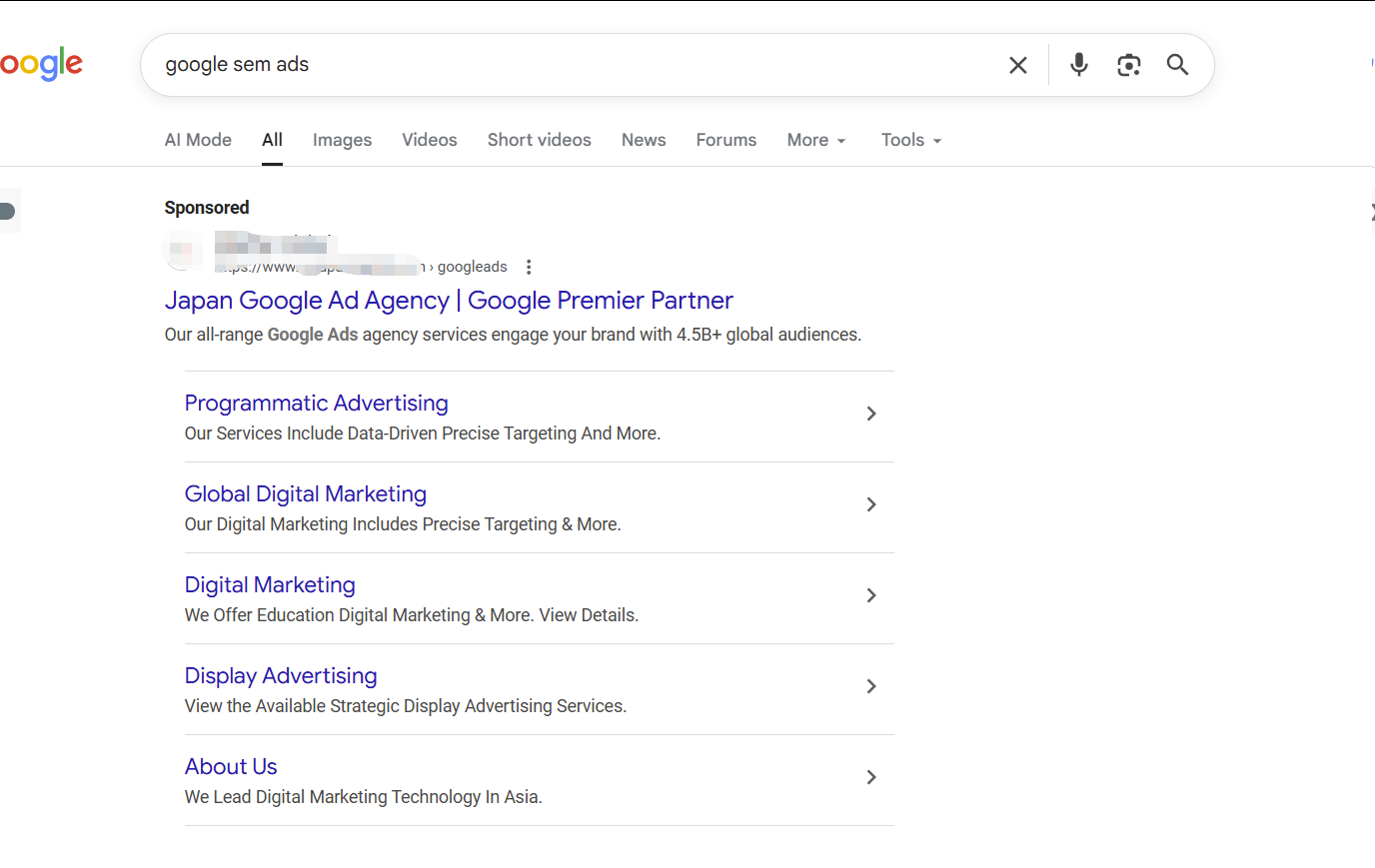
When you search for "google sem ads" on Google, the results marked with an "Sponsored" label at the top of the page are SEM ads.
What Is the Core Difference Between SEO and SEM?
Although SEO and SEM share the same goal—improving a website's visibility in search engines—they differ significantly in cost structure, speed of results, and sustainability of performance.
Cost Structure: Long-Term Investment vs Ongoing Payment
SEO mainly requires upfront spending on content creation and technical optimization, such as hiring writers, purchasing SEO tools, or building backlinks. Once a website's rankings improve, it can obtain almost free organic traffic.
SEM is different; it follows a pay-per-click model. After the ads go live, every click costs money, and once the budget stops, the traffic disappears immediately.
Example:
Suppose you spend $500 on SEO optimization and one blog post brings 1,000 organic visits; with SEM, $500 may only bring 200 clicks. Over time, SEO traffic will continue to grow, while SEM relies on continuous ad spend.
Speed of Results: Slow Build vs Instant
SEO can take 3–6 months or even longer to show obvious results; SEM, on the other hand, is extremely fast. Once an ad goes live, it almost immediately starts displaying, making it very suitable for new websites or promotional campaigns.
Sustainability: Long-Term Accumulation vs Instant Traffic
SEO traffic is more stable and has a stronger compounding effect; SEM is like a switch—once the ads stop, exposure immediately drops to zero.
Management Approach: Algorithm Optimization vs Bidding Strategy
SEO relies on algorithm rules and content quality; SEM is more about ad operations, requiring constant optimization of bids, ad copy, and landing page experience.
Usage Purpose: Brand Building vs Fast Customer Acquisition
SEO builds brand authority and trust; SEM focuses on sales conversions and short-term ROI.
How to Choose? Strategic Decisions Between SEO and SEM for Businesses
There is no absolute answer to whether you should choose SEO or SEM; the key is to look at the company's stage, goals, budget, and industry competitiveness.
Judging Based on Budget and ROI
For small and medium-sized businesses with limited budgets, it's recommended to start with SEO. Although the initial cost is high and the return is slow, the long-term ROI is more attractive.
For companies with sufficient budgets and high-margin products, SEM can be used to quickly test keywords and audience conversion rates, and then decide whether to invest in the long term.
Choosing Based on Industry Competitiveness
In highly competitive fields (such as finance, overseas study, insurance, and 3C products), the cost per click (CPC) of SEM can be extremely high. In this case, SEO offers better cost-effectiveness.
But if you are in an emerging industry or a seasonal market (such as Christmas gifts or short-term campaigns), SEM is more suitable because it can quickly capture traffic peaks.
Based on Business Stage and Goals
Startups: Use SEM first to obtain traffic data, then optimize SEO at the same time.
Established brands: Use SEO as the core and SEM to maintain exposure.
E-commerce brands: Combine both—SEO brings in traffic, SEM drives conversions.
Combined Strategy: SEO + SEM Dual Approach
The best solution is to combine both:
Use SEM to validate keyword performance and test ad copy;
Integrate the best-performing SEM keywords into SEO content;
Use SEO to improve organic rankings and thus reduce customer acquisition costs over the long term.
Case: An independent foreign trade site used SEM ads to target high-conversion keywords such as "best solar inverter 2025," and then optimized content through SEO. After three months, ad costs dropped by 40%, and organic traffic doubled.
Which Is More Suitable for Your Marketing Goals?
Choosing between SEO and SEM depends on your business goals and time frame. There is no one-size-fits-all answer. The right choice comes from understanding what you need right now and what you want to build for the future.
Ask Yourself These Key Questions:
How fast do I need results?
Need traffic immediately → Choose SEM
Can wait for steady, long-term growth → Choose SEO
What is my budget?
Limited or tight budget → SEO (time investment, lower direct cost)
Larger or flexible budget → SEM (pay for each click)
What type of traffic do I want?
SEO attracts users who are actively searching for information or solutions
SEM targets users with strong buying intent and ready-to-act behavior
Example: ads shown for “buy security camera today”
Best Practice: Use Both
Most businesses use a combined strategy:
SEM delivers short-term traffic and quick conversions
SEO builds long-term visibility, authority, and sustainable growth
When used together, SEO and SEM support each other and create a more balanced, scalable search marketing strategy.
Conclusion
The two wings of digital marketing are SEO and SEM. Recognizing the difference between SEO and SEM helps businesses apply each strategy effectively: SEO provides steady growth and long-term reach, while SEM delivers faster results and higher visibility. A successful approach balances both according to the stage of promotion. Companies focusing on long-term exposure and brand strength benefit more from SEO, whereas short-term campaigns or new product launches rely on SEM. Businesses achieve maximum returns from search marketing by combining both strategies.
Frequently Asked Questions
Which Is Cheaper, SEO or SEM?
In the long run, SEO offers better cost-effectiveness, but it requires an initial investment of time and resources; SEM is a model of continuous expenditure.
Can I Use SEO and SEM at the Same Time?
Of course. Many successful companies adopt a "SEO + SEM dual approach." SEM validates keyword conversions, SEO optimizes content, and together they achieve low-cost, high-conversion results.
How Long Does SEO Take to See Results?
It usually takes 3–6 months to see obvious changes, depending on industry competition, website quality, and the amount of content.